

The Blue Dot Problem
Why the Concert Business Is Splitting in Two

It began as a joke on Reddit and then spread to Tiktok.
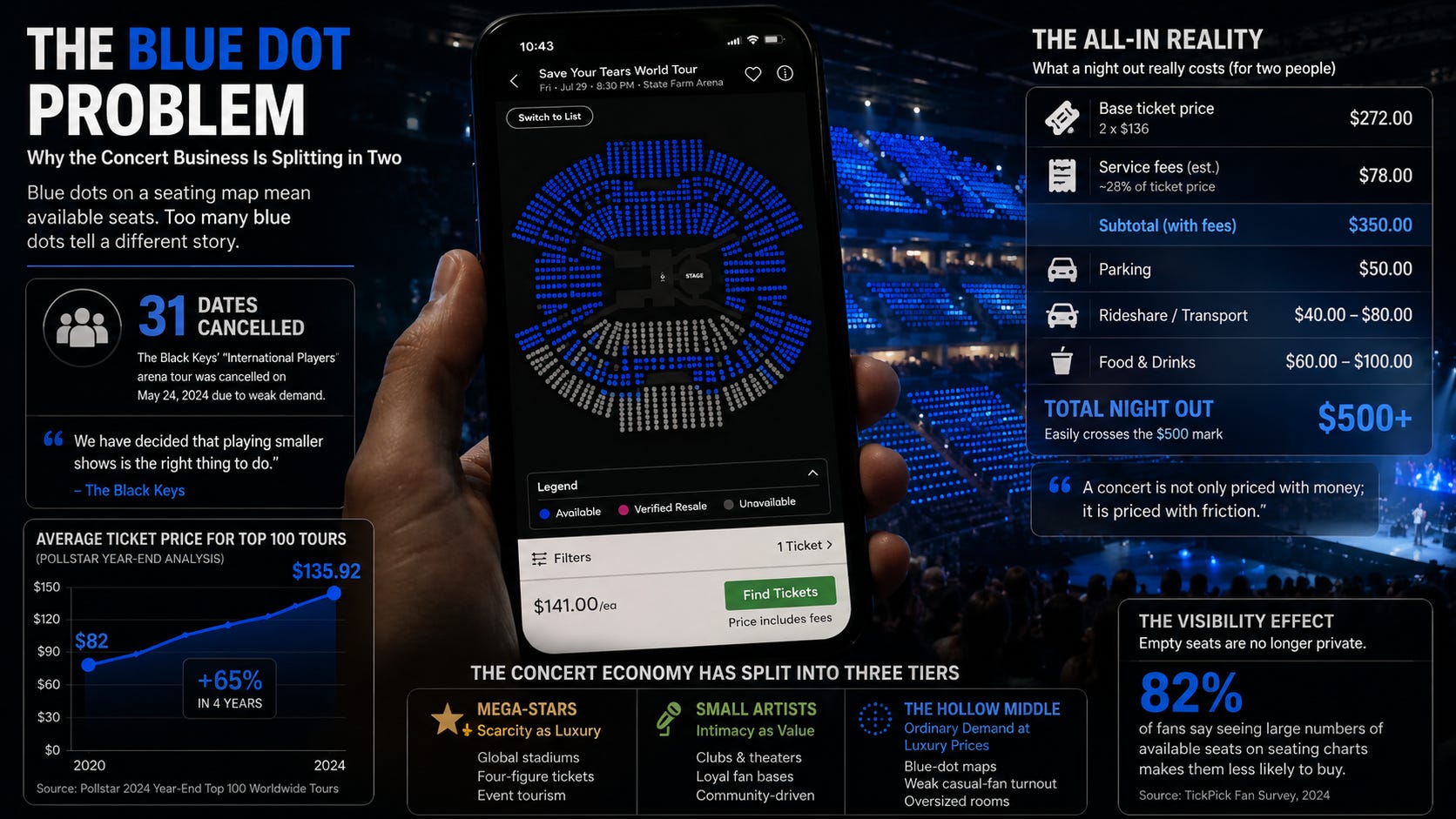
A fan would open a ticketing app before a major arena show and notice something unsettling: the upper decks were still glowing blue. Not scarcity, not a sell-out, but rows of unsold inventory staring back through the screen. Soon, those screenshots started moving through TikTok like weather maps from a storm system. People zoomed out on seating charts and laughed at the oceans of blue, but the laughter had an edge to it. The map told a story the industry did not want told.
Inside the ticketing business, those blue dots are simply available seats. Inside the music business, they have become something more dangerous: public evidence that demand is not where the price says it should be. This is the Blue Dot Problem. And it is not really about empty seats. It is about the moment live music stopped feeling like a night out and started feeling like a financial decision.
What’s Causing So Many Big Tours to Flop?
The New Concert Economy
On May 24, 2024, fans of The Black Keys noticed this shift in real time. The band’s International Players tour, a 31-date North American arena run, suddenly vanished from Ticketmaster. While industry trade publications like Variety and Billboard reported on the abrupt cancellation, the digital trail on Reddit had already told the story. Before the deletion, seating charts for venues like Baltimore’s CFG Bank Arena were filled with blue. In some sections, not a single seat had been claimed.
The band eventually pointed toward smaller rooms as the more honest answer, moving into theaters for their subsequent No Rain No Flowers tour. But the incident became the opening bell for a new reality. For years, touring was the safe harbor of the music business. As streaming decimated recorded revenue, the live show became the primary engine of wealth. But the industry miscalculated: it looked at the superfan and assumed they represented the entire market.
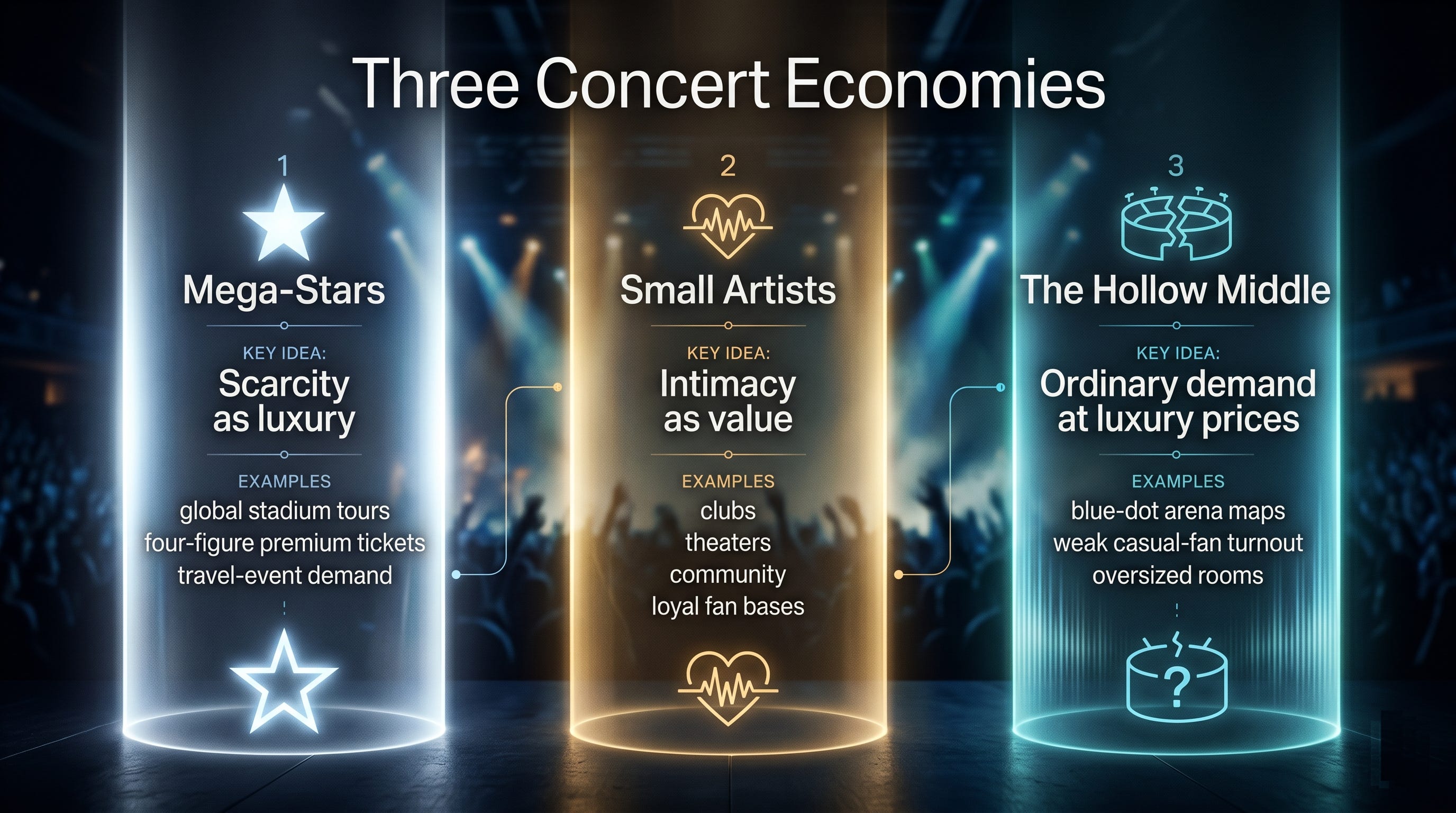
At the very top, this works. Artists like Taylor Swift or Beyoncé sell scarcity as a luxury good. At that altitude, price becomes part of the story. A four-figure ticket is not just admission; it is a social signal. But luxury logic does not scale downward cleanly. A 700 dollar ticket to a half-full hockey arena feels like an insult wearing a barcode.
The concert economy has split into three distinct tiers: the mega-stars selling scarcity, small artists selling intimacy, and a hollowed-out middle where arena acts are trying to sell ordinary demand at luxury prices. That middle is where the blue dots live.
When the Math Kills the Magic
The emotional heart of an arena is not the superfan in the front row; it is the casual fan in the back. These are the people who know six songs and think, Sure, why not? They create the atmosphere. They make a concert feel like a cultural event rather than a private gathering of the wealthy. You can feel it walking into a half-empty arena fifteen minutes before showtime. The merch lines are thin. The upper bowl is dark. The room sounds small before the opener even begins.
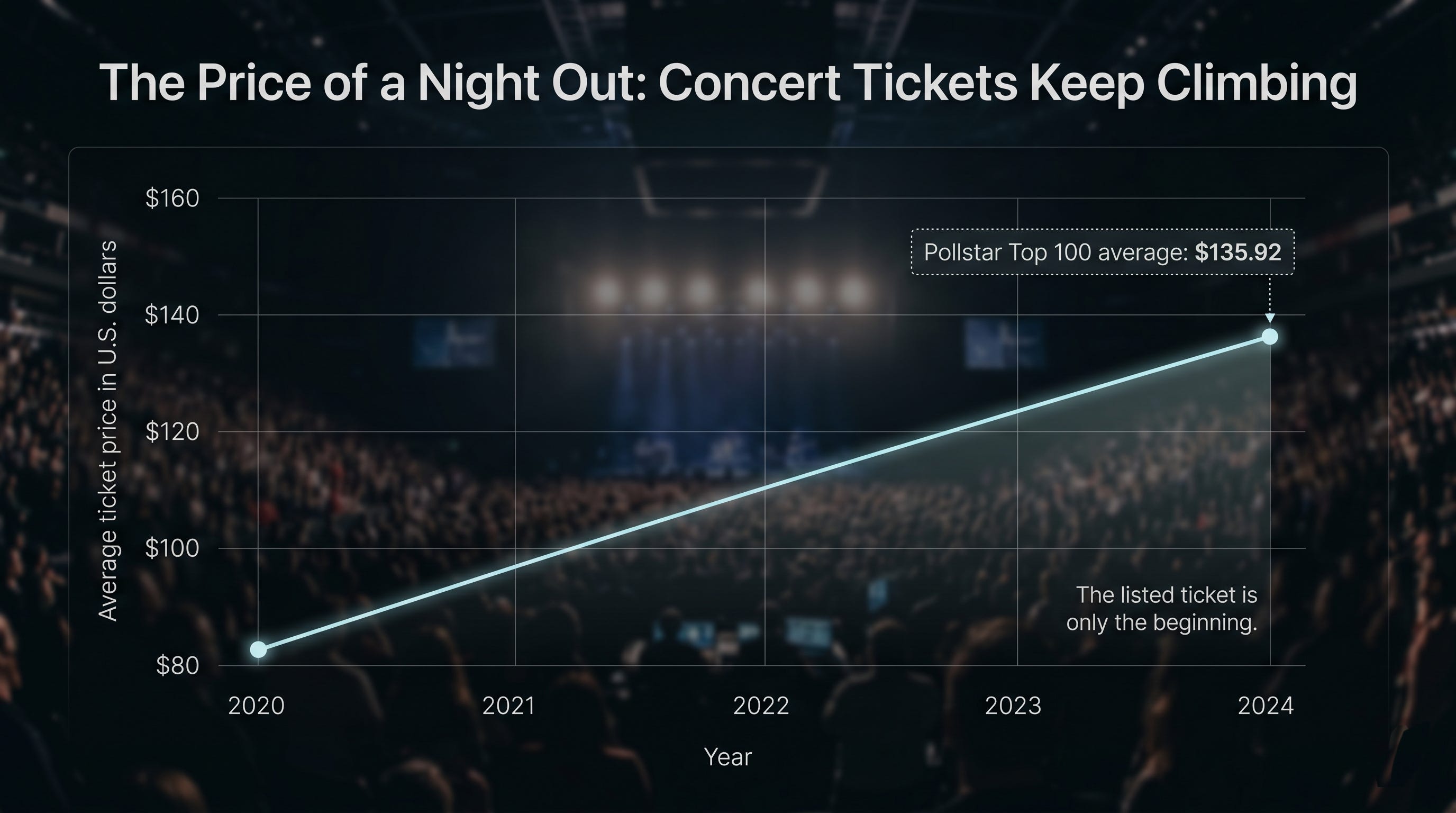
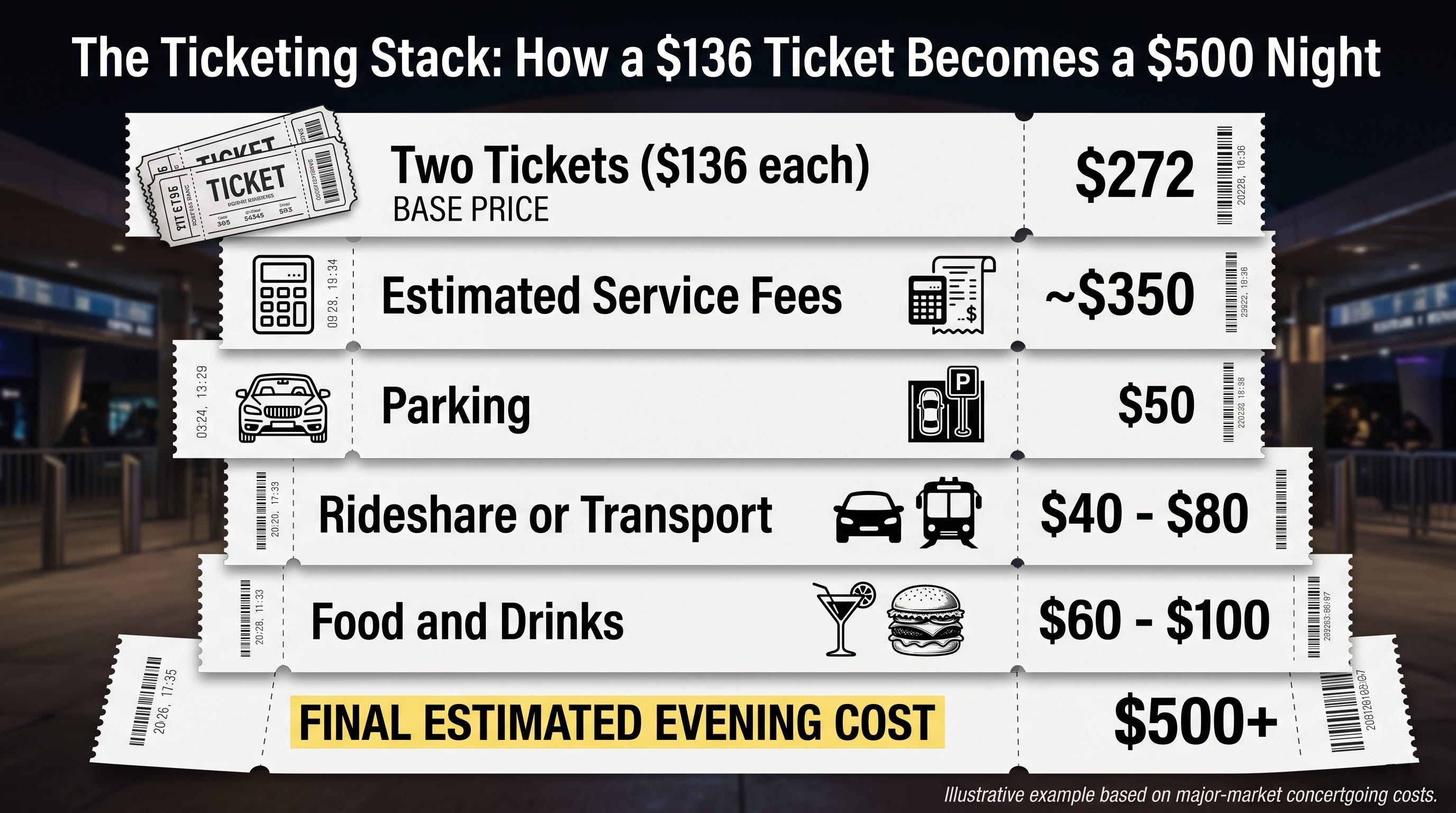
But the math has turned against them. Pollstar’s 2024 year-end analysis put the average ticket price for the Top 100 worldwide tours at 135.92 dollars. In major U.S. markets, the “all-in” reality is often much heavier. Two 136 dollar tickets become nearly 350 dollars after service fees. Once you add 50 dollar parking, a rideshare, and a few drinks, the night can easily cross 500 dollars.
How Concert Tickets Became a $300 Problem
The industry spent years optimizing for the fan who would pay anything. It forgot about the fan who needed a reason. This distinction matters because the live business depends on emotion. A concert is not only priced with money; it is priced with friction.
The Visibility Problem
To be fair, the live business is not collapsing; the top end is still booming. Furthermore, artists are not inventing these prices out of greed alone. Fuel, insurance, trucking, lodging, and specialized stage labor have all become significantly more expensive since the pandemic. The “break-even” point for an arena show is now dangerously high.
However, premium and demand-based pricing systems have backfired. By using algorithms to adjust prices based on real-time demand, the industry accidentally trained fans to think like gamblers: wait long enough and maybe the algorithm folds.
Recent regulatory shifts have pushed ticket sellers toward fuller upfront price disclosure. In the United States, the FTC’s junk-fee rule now requires greater visibility into total pricing. In Canada, Bill C-59 targeted drip-pricing practices. But transparency has only highlighted the bloat. The seating map has become a public scoreboard. In the old days, weak demand was a private failure. Now, the blue dots turn that failure into a marketing problem.
The Geography of Arbitrage
This friction is encouraging artists and promoters to think more aggressively about geography. They are looking for markets where the “net share,” the amount remaining after the room, route, fees, and production are paid, is more favorable.
While the U.S. remains the richest market, moving gear from Seattle to Miami is a logistical nightmare compared to the density of Europe. In cities like Prague or Warsaw, lower venue costs and more established all-in pricing traditions reduce fan resentment.
How has Taylor Swift’s ‘Eras Tour’ benefitted Singapore’s economy?
In Southeast Asia, the strategy is even more pointed. Singapore used a tourism grant to help secure exclusive regional dates for Taylor Swift’s Eras Tour, framing the concerts as a national strategy to drive hospitality and retail revenue. They understand that a sold-out stadium fills hotels, restaurants, and airline seats long after the encore ends. The U.S. often treats these events primarily as transactions.
What the Blue Dots Mean
The real story of the modern concert circuit is not fame. It is whether the room still fits the relationship. The artists surviving this shift are the ones honest enough to size the room correctly. A packed theater is better than a haunted arena. No lighting rig can hide absence, and no LED wall can manufacture belief.
Fans accept live music; they reject the feeling that every layer of their experience has been optimized to extract one final dollar. They are not asking for cheap magic. They are asking not to feel like the mark.
The blue dots are not just unsold seats. They are the audience that refuses to be mistaken for endless demands.
The empty seat used to be a private failure. Now it is part of the marketing.
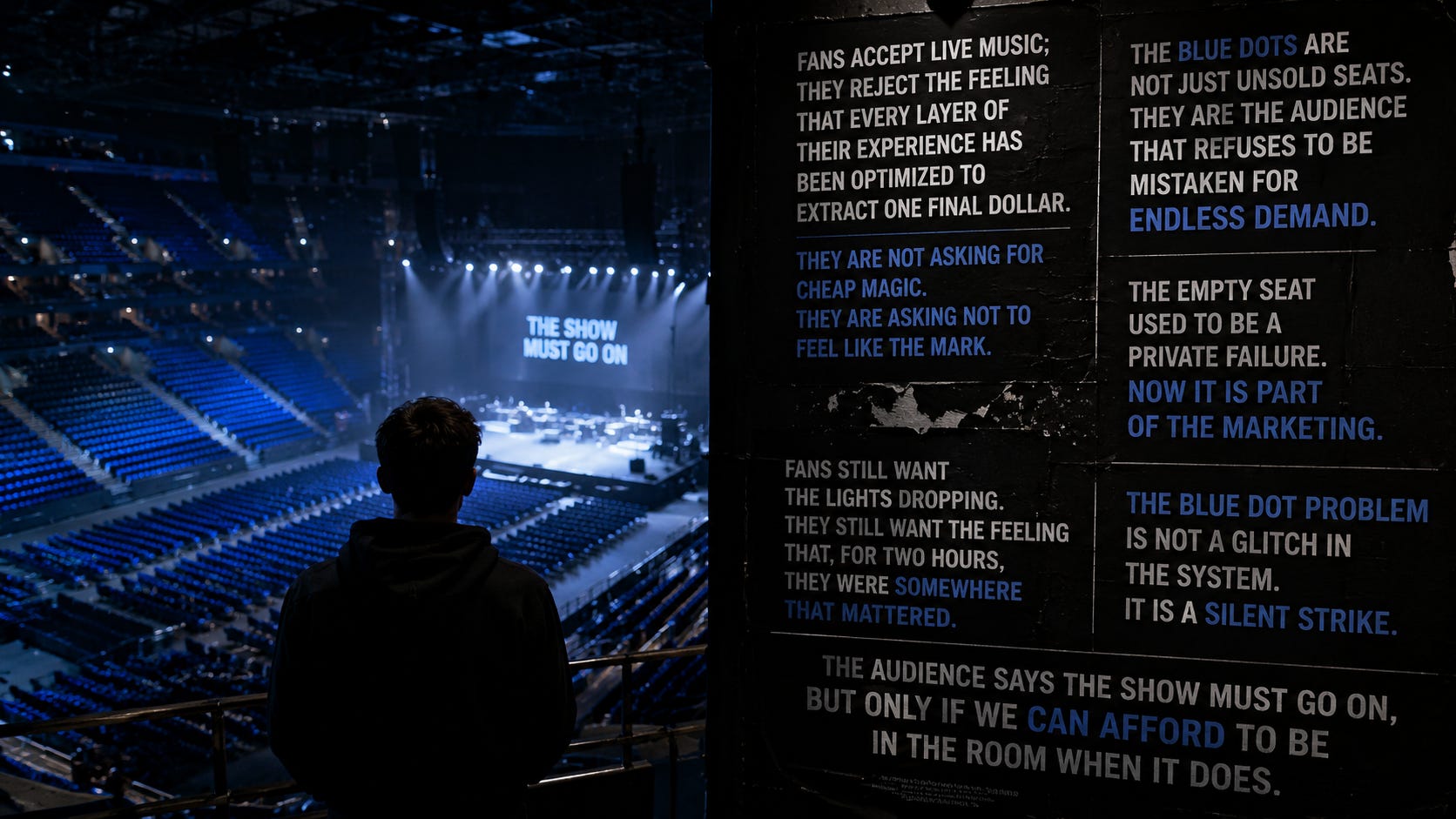
Fans still want the lights dropping. They still want the feeling that, for two hours, they were somewhere that mattered.
The Blue Dot Problem is not a glitch in the system. It is a silent strike. The audience says the show must go on, but only if we can afford to be in the room when it does.
Algorithms, peak-demand pricing, mounting service fees, parking, etc. ad nauseam, all point to the corporate demand for higher profits. Execs get bigger bonuses by pushing these agendas so the stock price goes up. Great. For the stockholders.
Is this the best model capitalization has to offer? Apparently. Big business > little people.
Raise taxes so businesses keep more capital in the business. Raise or eliminate social security salary caps. Otherwise, the rich get richer and the rest can go, well, you know.
good stuff -- the amount of financial planning that needs to go into purchasing concert tickets now is insane. No wonder folks are taking their time to buy.