

The Buzz on Caffeine
How the World’s Favorite Drug Powers Our Lives

Modern society relies on caffeine as an invisible current, fueling everything from boardroom decisions at companies like Starbucks to the late-night coding sessions of innovators like Elon Musk. As the most consumed psychoactive substance on the planet, it shapes daily routines for billions. Recent data from 2025 reveals that 94% of American adults indulge in caffeinated beverages, with 64% doing so daily, marking a steady rise in consumption patterns.
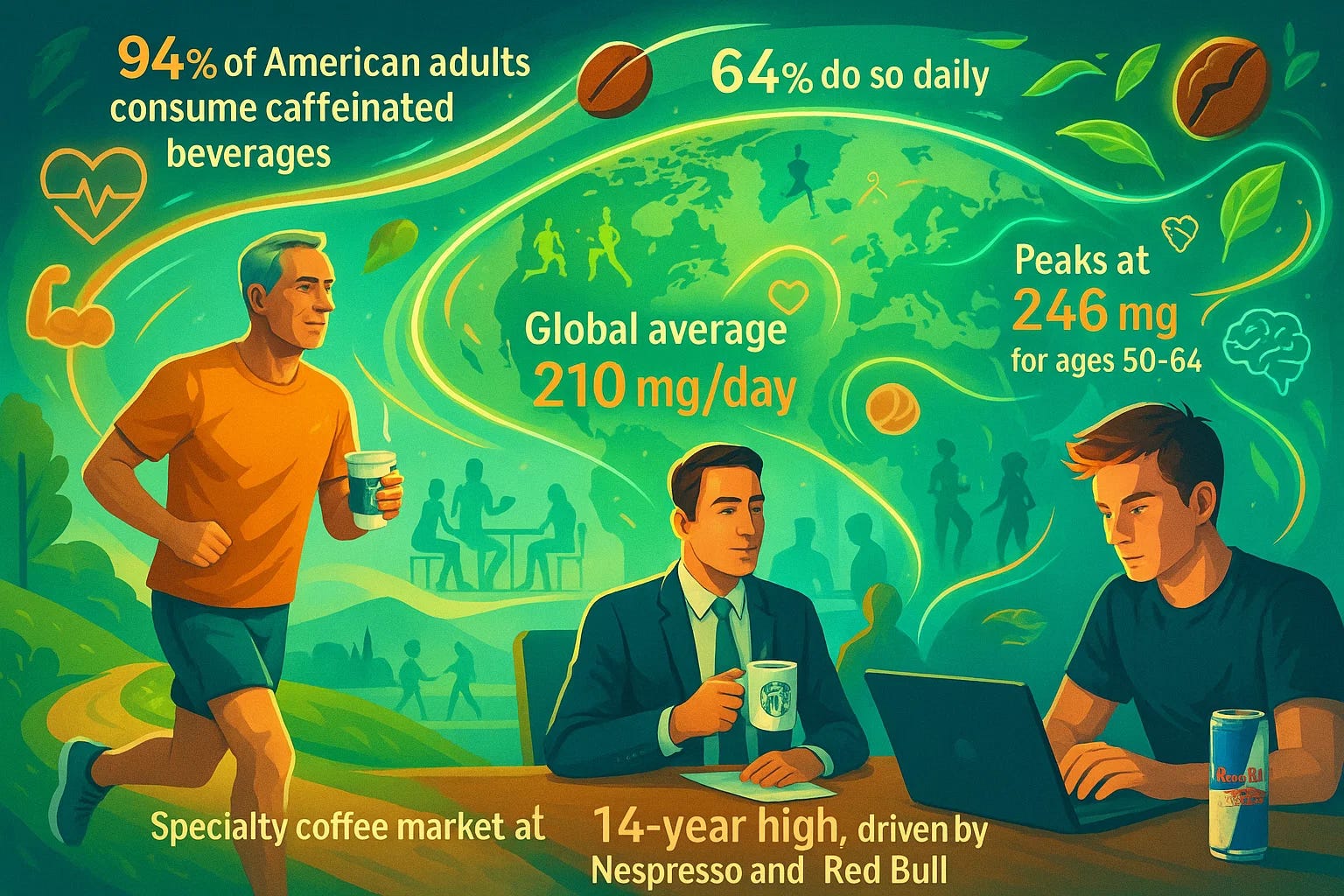
Globally, the average intake among consumers hovers around 210 milligrams per day, peaking at 246 milligrams for those aged 50 to 64. This surge aligns with the specialty coffee market hitting a 14-year high, driven by brands like Nespresso and Red Bull expanding their reach into energy-boosted lifestyles.
The story of caffeine isn’t just about numbers—it’s about how this humble alkaloid, extracted from beans roasted in vast facilities from Ethiopia to Seattle, rewires our biology to meet the demands of a nonstop world. Howard Schultz, the architect behind Starbucks’ global empire, once described coffee as a “third place” between home and work, but the real magic lies in the molecule that makes that ritual addictive. Drawing from a synthesis of scientific reviews and fresh 2025 research, this exploration uncovers caffeine’s mechanisms, performance boosts, health impacts, and the smarter ways to harness it without the crash.
