

The Glass Cradle
Why Connectivity Is Rewriting the Social Contract

There is a moment, somewhere past midnight, when the music is loud enough to blur thought but not loud enough to erase awareness. A man stands in the center of a nightclub, thirty years old, watching the room instead of moving through it. He is surrounded by friends, yet not one of them has children.
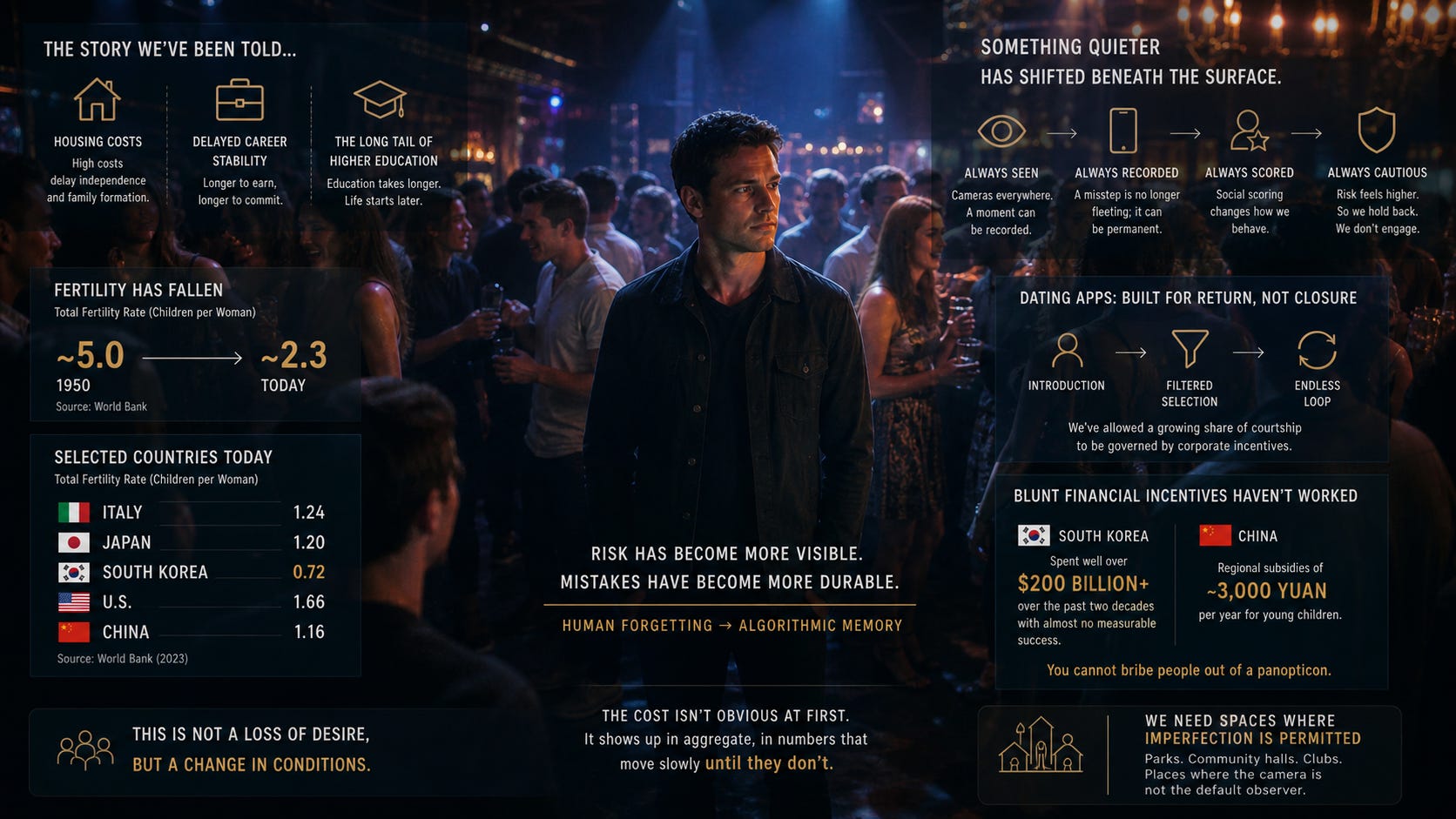
That detail matters less as a statistic and more as a signal. For decades, the story of falling birth rates has been told in the language of economics: housing costs, delayed career stability, and the long tail of higher education. All of that is true, but it also remains incomplete. Something quieter has shifted beneath the surface.
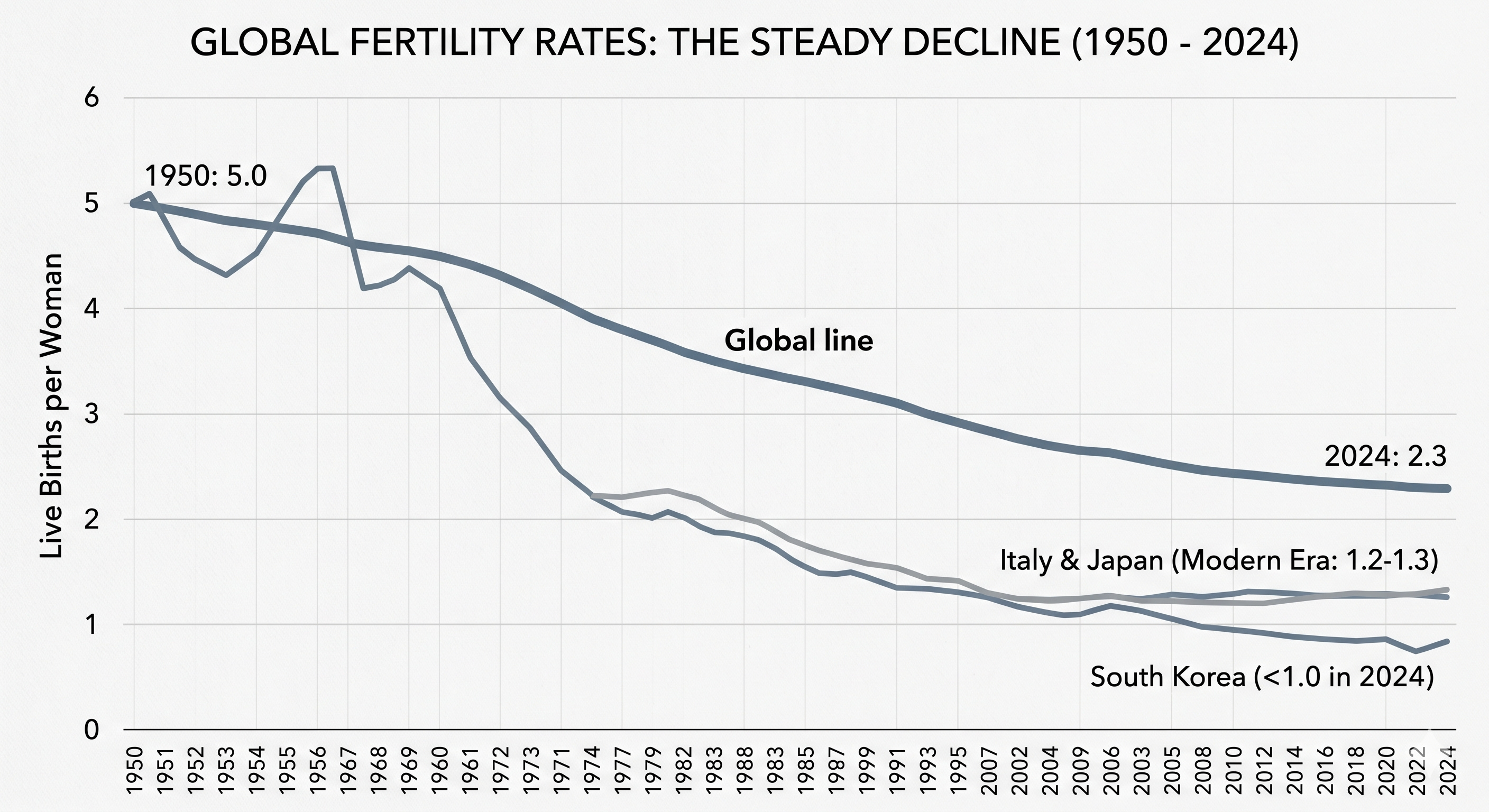
Across most developed and middle-income countries, fertility has dropped to levels that would have seemed unthinkable a generation ago. The global fertility rate has fallen from about five children per woman in 1950 to roughly 2.3 today. In countries like Italy and Japan, the numbers are far lower; South Korea now sits well below one. These are not marginal declines. They are structural.
The usual explanations still hold: delayed marriage, housing pressure, and women’s expanded educational and professional opportunities. But they do not fully capture the mood of the room. To understand the situation, return to the nightclub.
Watch closely. People are present, but they also acutely feel the gaze upon them. Phones are out. Cameras are everywhere. A moment that used to dissolve into memory now has the potential to persist. The cost of a social misstep has changed. It is no longer just a fleeting embarrassment; it is a permanent record.
Human relationships have always depended on a certain tolerance for awkwardness. Attraction is clumsy. Courtship involves risk. For most of history, those moments lived and died within a room. Now they can travel. We have moved from a world of human forgetting to one of algorithmic memory. People do not just feel watched; they record each other, curating a digital panopticon in real time.
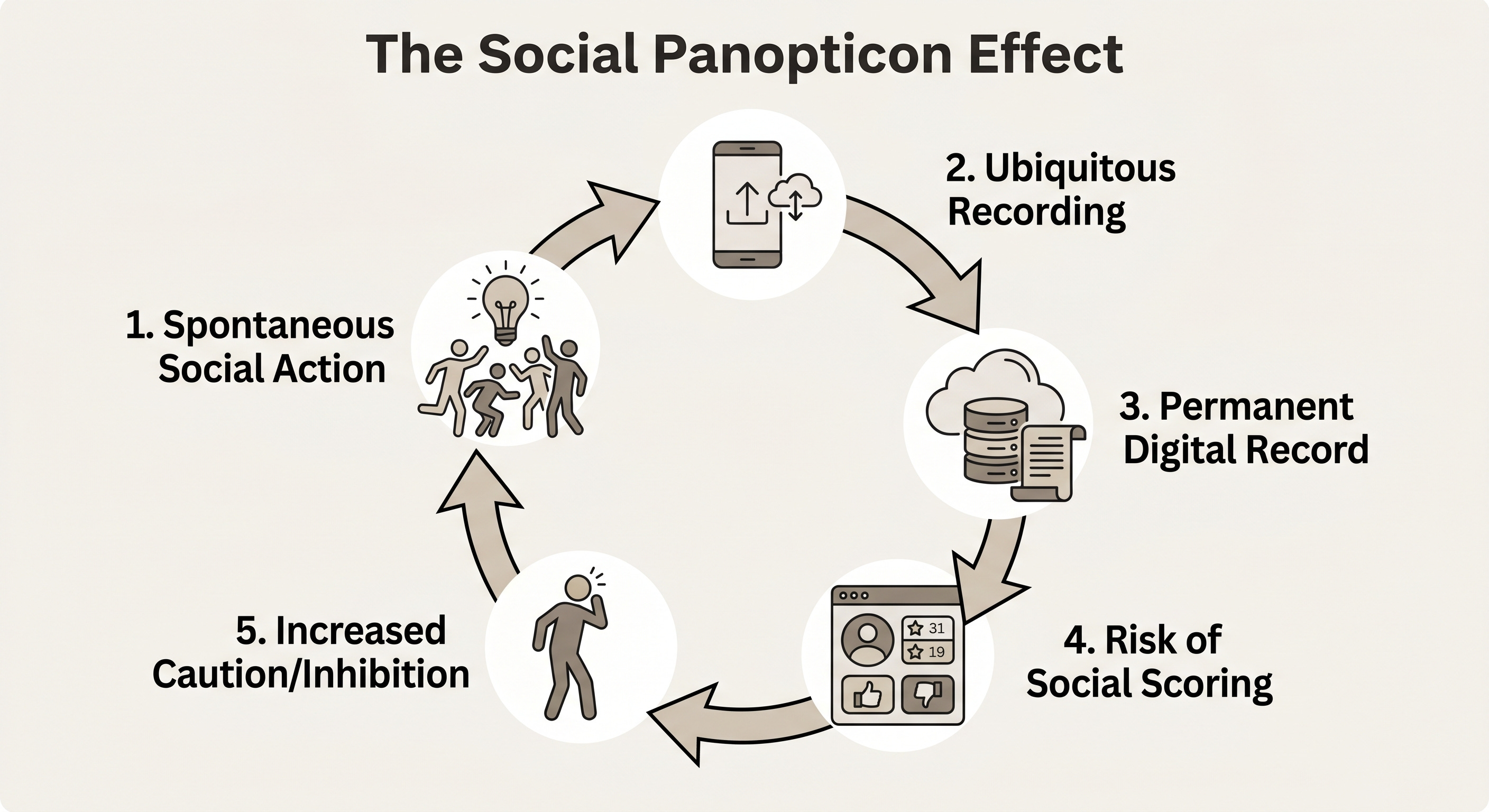
The result is a new kind of social scoring behavior. If you approach a stranger and fail, you risk becoming content. This shifts the real-world stakes from temporary embarrassment to permanent identity. So people adapt. They become cautious, preferring environments where they do not have to risk being recorded.
Dating apps fit neatly into this risk-averse world. Their incentives are not mysterious. They are not built around closure; they are built around return. By turning introduction into a filtered selection loop, we have allowed corporate incentives to govern a growing share of courtship. We are only now seeing the demographic cost of removing the necessary friction from the social encounter.
Why Dating Has Become A Financial Luxury
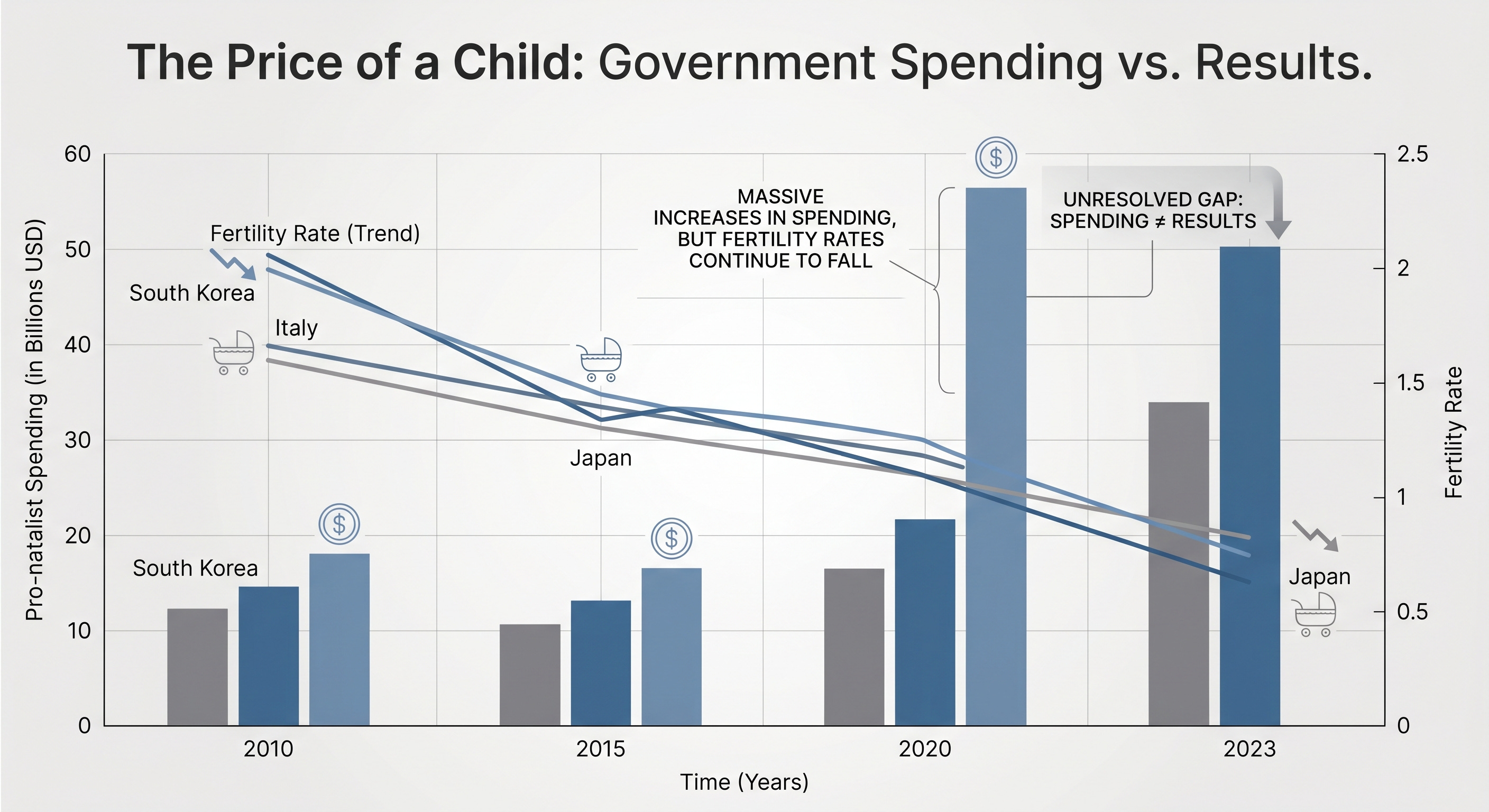
Governments have tried to intervene with blunt financial instruments. South Korea has spent well over two hundred billion dollars on incentives over the past two decades with almost no measurable success. China has experimented with regional subsidies of several thousand yuan per year for young children. These policies fail because they treat birth rates as an accounting problem rather than a behavioral one. You cannot bribe people out of a panopticon.
The pattern that emerges is not a loss of the desire for connection, but a fundamental change in the conditions under which it forms. Risk has become more visible. Mistakes have become more durable. We have treated technology as a lawless frontier, and we have allowed the most intimate mechanics of human interaction to be monetized without a second thought. We were promised that this approach would yield more openness, more connection, and more freedom; instead, it has produced a social order that penalizes the very vulnerability required to build a future.
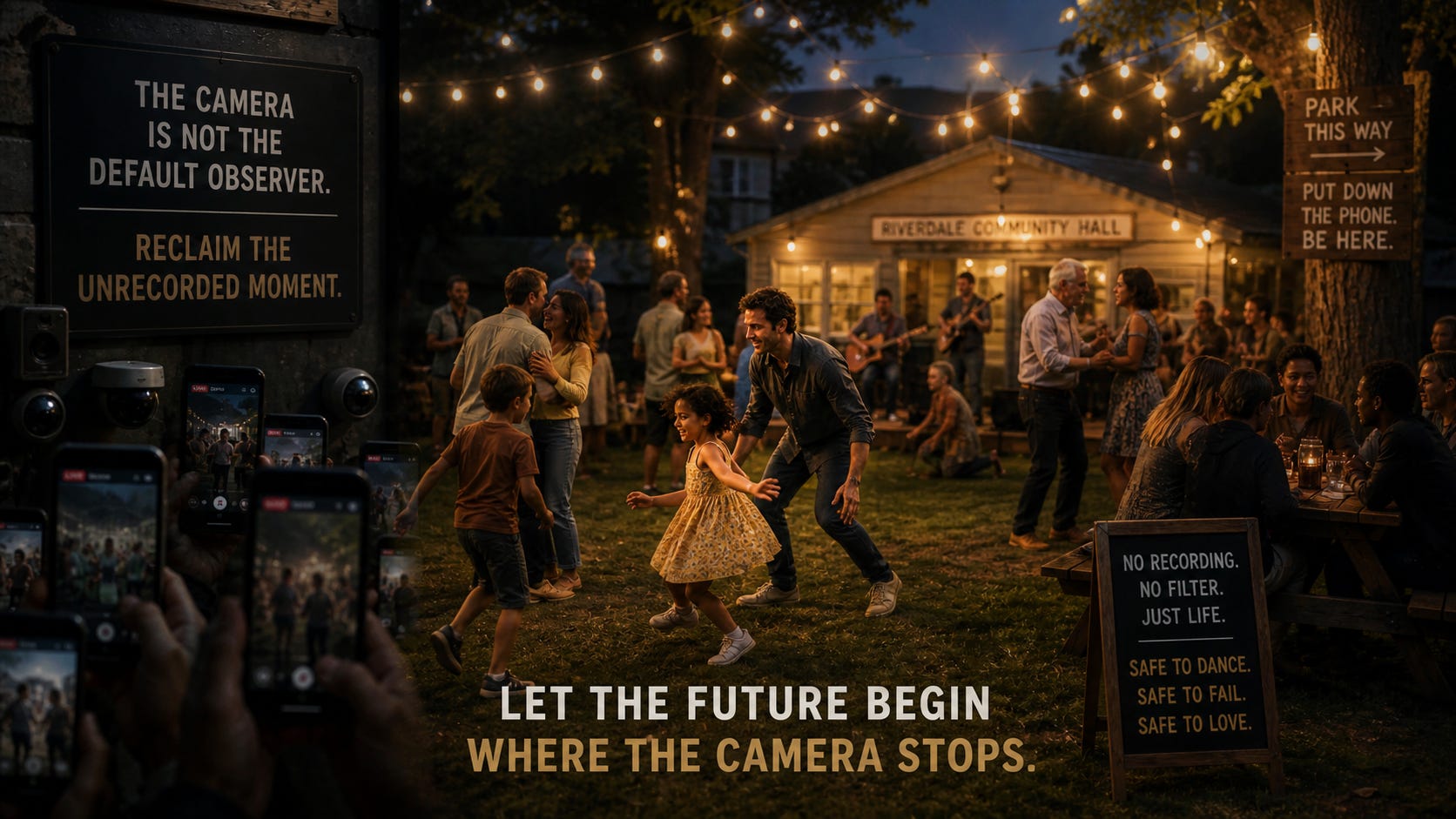
A society that wants families must prioritize the human over the algorithm. It must reclaim the right to a social life that is not perpetually on the record. We need physical spaces like parks, community halls, and clubs where the camera is not the default observer and imperfection is once again permitted.
The future is not disappearing. It is being deferred by our caution. To nurture a new generation, we must create a world where they can dance, fail, and love freely, without the threat of a digital afterlife.
It is time to learn how to steward the unrecorded moment. Let the future begin where the camera stops.
Excellent insight, but one more factor is proving even more sinister. Just as social media has been weaponized to foment anger as the algorithmic way to increase engagement and profits, dating apps have been hijacked by algorithims so provide the dopamine of of a connection, but are intentionally pairing you with people you are not compatible with. The goal of the dating app is to keep you on the app, not have you fall in love and kill their business model.