

What I Was Actually Chasing
Nine countries. The feeling I knew from San Francisco and Los Angeles. And what kept killing it everywhere else.

It was four in the morning in Lisbon, and the streets were still busy.
Not winding down. Not the last few people heading home. Busy the way a city is busy at noon. I stood outside the Time Out Market and watched a group of young men argue about something, laughing between points. A woman walked past with groceries. The cafe two doors down was full.
I had left Los Angeles because I had watched something drain out of it. The hunger. The belief that building was the point. What replaced it was something more comfortable: the intoxication of sides, the slow substitution of commentary for creation.
I was not running from that. I was looking for its opposite. I had seen this feeling appear before, and I had seen it disappear.
I was not naive about what that meant. I had spent years in cities that are supposed to work. Chicago and New York before California. London, Singapore, Melbourne, and Seoul after it. San Francisco in the late nineties had the feeling I was chasing, that particular electricity of a city mid-invention, before it learned to price out everyone who was not optimizing for an exit. Los Angeles had it in the years I described in Part One. I knew the temperature of a room where something real was being built.
What I was looking for was a feeling I knew well and could not easily name. The feeling you get when other people’s ideas energize you instead of exhaust you. When ambition is social rather than competitive. When you can sit across from someone and know, within minutes, that you are both trying to push something forward, even if you disagree on how.
I was looking for changemakers who still wanted community.
So I moved. Country to country, not as a tourist but as a resident. Months at a time, sometimes longer. I paid less attention to scenery and more attention to rooms. To whether people leaned forward when they talked about what they were building or leaned back when they listed what was in their way.
Across nine countries and several years, I did not find a perfect answer. I found something more useful: a clearer picture of what kills the thing I was looking for. And in a few places, real evidence that it still existed.
Portugal: The Echo of a Beginning
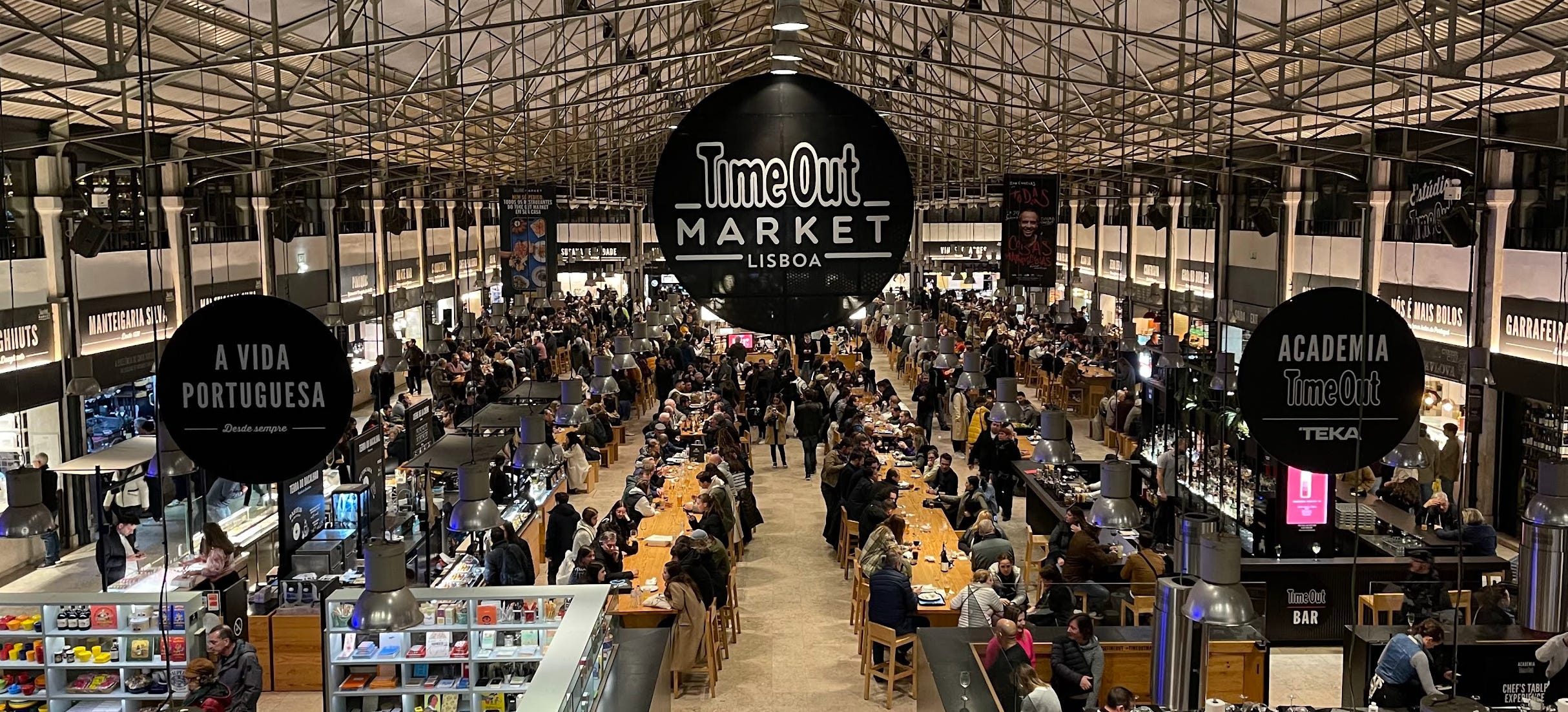
Lisbon's Time Out Market. This market serves as a significant hub for founders and builders in the city. At four in the morning, it was still full.
That four in the morning Lisbon street was not random. The Portuguese relationship with time is different in a way I kept noticing.
There is a word for it, saudade, which translates loosely as “nostalgic longing” but operates more like a way of moving through the world. You are never fully in the present because the past and the future are always pressing in. It sounds heavy. In practice, it makes people patient with the slow work of building things, which is rarer than it sounds.
The startup scene when I arrived was alive in the way early scenes always are: chaotic, slightly overconfident, and full of people with decks and demos and plans to change some corner of the world. The food was extraordinary. Creativity spilled into the streets in a way that felt unforced, which is the only kind that matters.
Something was missing, and it took me months to name it.
The ambition was there. The urgency was not. People wanted to build something interesting. Not necessarily something that kept them up at night. There is a difference between those two, and it matters more than it sounds. Interesting ideas get discussed at dinner. The other kind gets you out of bed at six in the morning with a problem you cannot stop turning over.
Lisbon felt like a city that had quietly removed the deadline and was deciding whether to miss it. I loved it there. I did not find what I came for.
Spain: Motion Without a Horizon
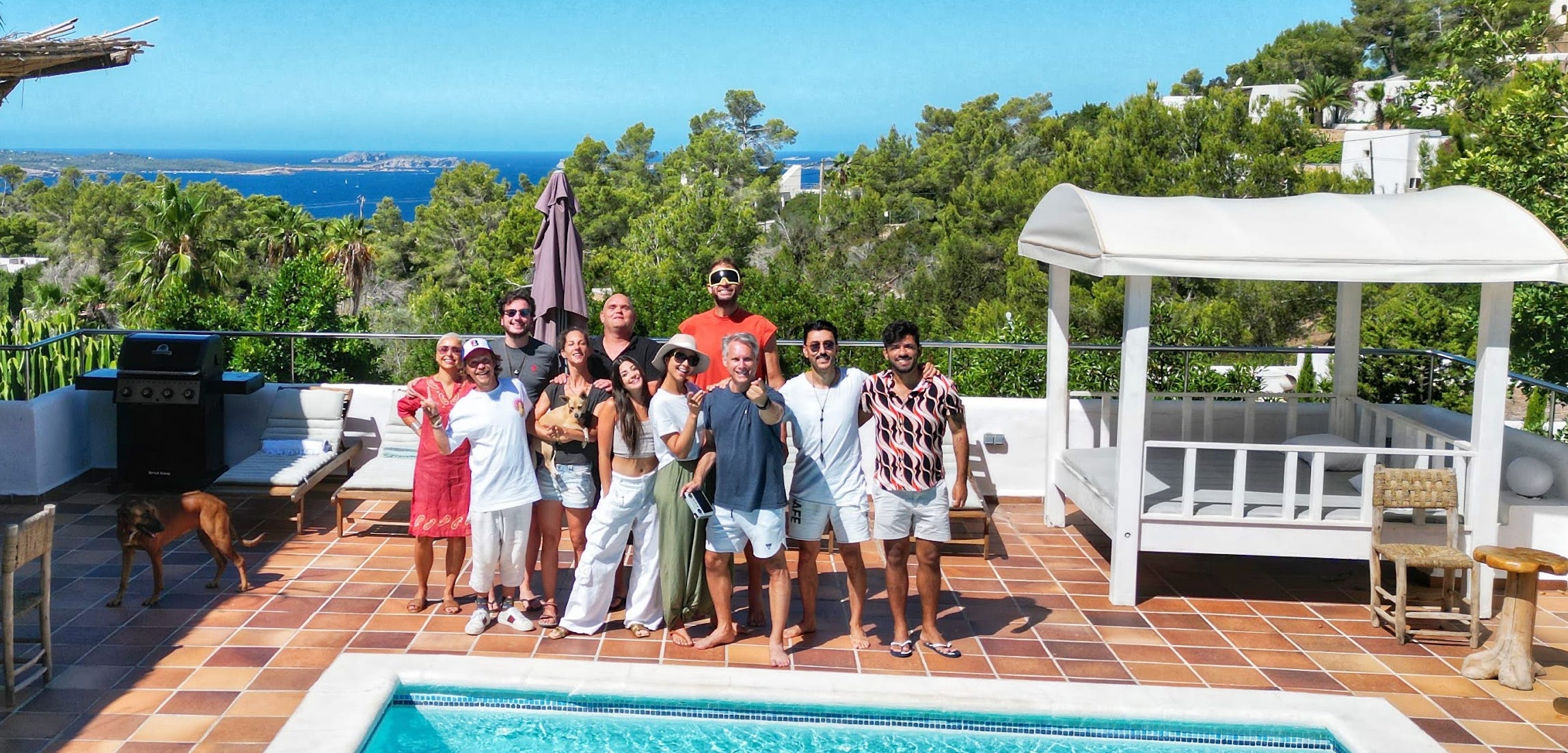
Ibiza hosted a mastermind gathering of over fifty entrepreneurs. The resort was full of people who came to collaborate. The conversation unfolded a distinct narrative.
I remember a dinner at a high-priced beach club in Ibiza; six of us, two hours in, the conversation having drifted far from the pitch meeting it started as. One man, in his mid-forties, had been building the same company for nine years. He was not bitter. He was tired. The distinction matters. Bitterness still has energy in it. Fatigue has made its peace.
What struck me more than the fatigue was the temperature of the conversation itself. Nobody was building on what anyone else said. People were waiting to speak, not listening to respond. Every story curved back to the teller. Me, not We. I had sat in enough rooms where the opposite was true to feel the difference immediately, and the difference was everything.
The conversation kept finding its way back to what was not working. The regulatory environment. The tax structure. The way the culture treated visible failure as something to hide rather than learn from. These were not complaints without basis. They were accurate.
What I kept noticing across Spain was the difference between two kinds of energy that look similar from a distance. There is the energy that keeps something alive, that protects what exists, and holds the line against what would take it. And there is the energy that reaches toward something that does not exist yet. The best creative environments run on both. Spain had the first in abundance. The second had gone quiet.
The dream had not died. It had narrowed. Work was about getting by, not getting somewhere.
Italy: A Future Version of Myself
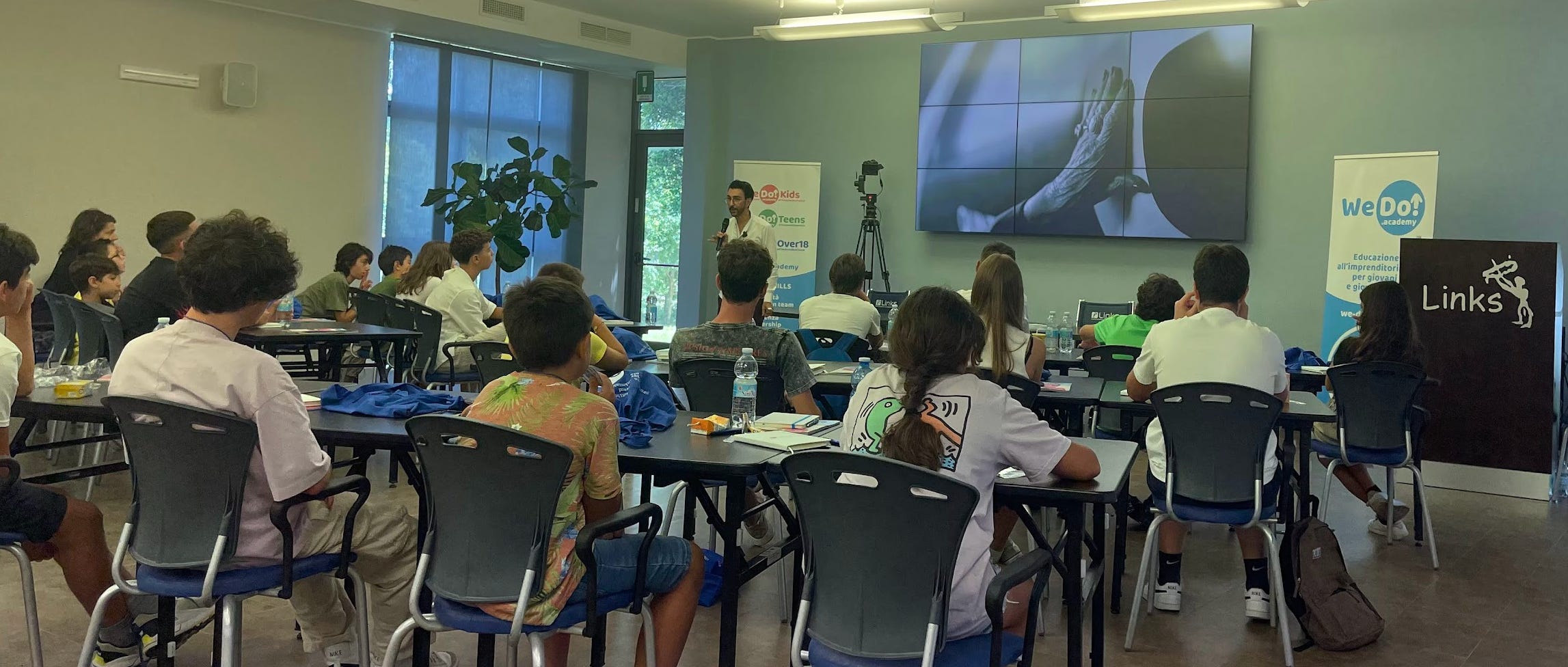
WeDo Academy, Lecce. I had the privilege of instructing a class of high school entrepreneurs. Italy's next generation was asking exactly the right questions.
Italy makes you better at living but worse at working, and it does so on purpose.
I spent a long stretch north of Rome and a shorter one in Lecce. In both places, time moved differently. A two-hour lunch was not an indulgence. It was the correct use of two hours. History was not background. It pressed in, demanding your attention simply by existing. You do not check your watch in front of the Pantheon. You absorb it.
I loved Italy with the kind of love that does not need justification.
But it showed me something specific about myself: where I will slow down, not where I should accelerate. The creative energy I was tracking exists in Italy, but inside corridors with long histories and established hierarchies. Fashion. Design. Food. The open-frontier feeling, the sense that the rules had not yet been written, was harder to locate.
Italy is where I will go when I am done building. I am not done.
Turkey: Momentum Under Constraint
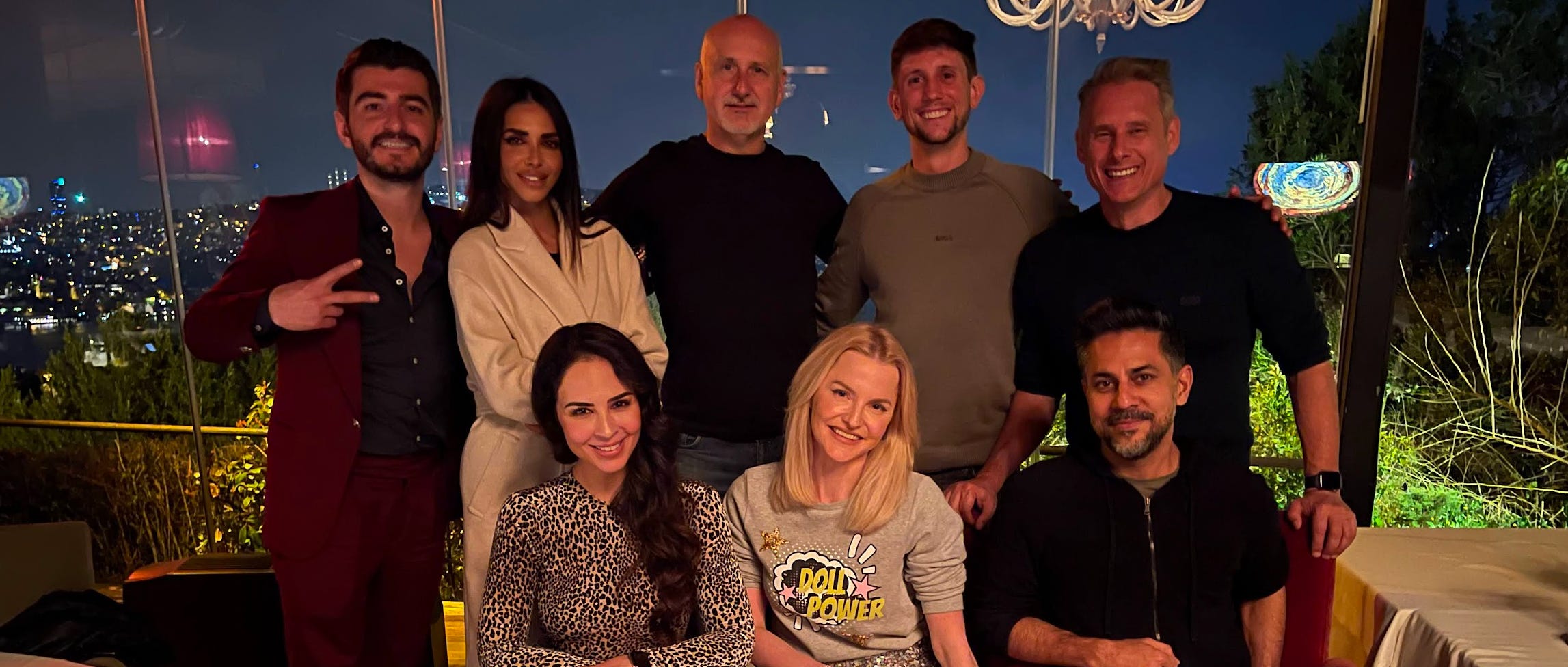
Istanbul always brings outstanding minds together. A city that has been a bridge between Europe and Asia for a thousand years has learned how to make room for people with somewhere to go.
Istanbul is the most cinematic city I have lived in, and I mean that as an observation rather than a compliment. It performs its own grandeur constantly. The Bosphorus at dusk. The call to prayer off the hills. A ferry horn cutting through the early morning before the city fully wakes. The grand bazaar at noon. Every scene is already composed. You feel like a character in someone else’s film.
The entrepreneurs I met were some of the sharpest problem-solvers I encountered anywhere on this trip. They had learned to operate in conditions that would stop most Western founders cold. Regulation that shifted unpredictably. A currency that made long-term planning feel theoretical. Bureaucracy with no interest in your timeline.
The energy was real. The velocity was not.
What develops in constrained environments is a particular kind of intelligence: expert at finding the gap in the fence, at building something real despite the system. That intelligence is impressive. It is also exhausting in a way that accumulates. The people I admired most in Istanbul were the ones who had taken their abilities elsewhere. Inside the system, momentum never quite compounded.
Lebanon: Ambition Without a Floor
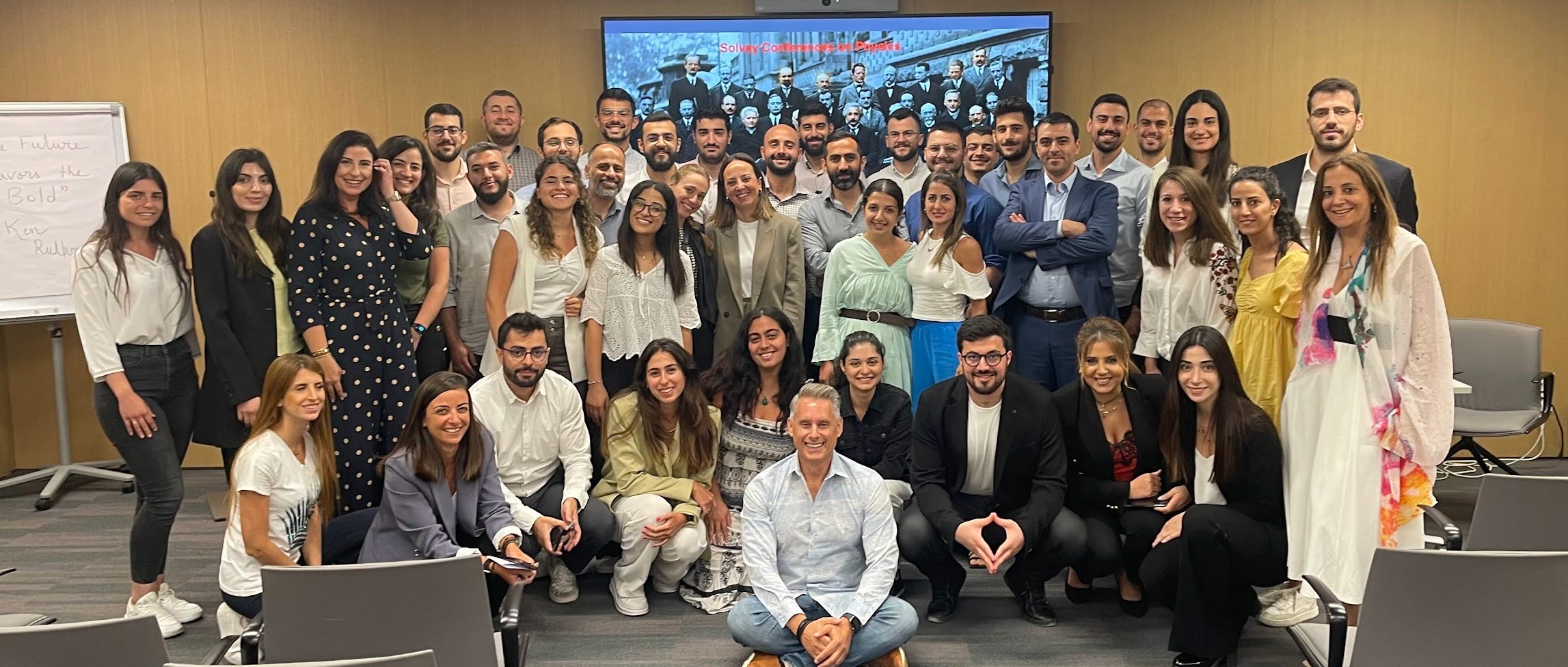
Beirut. A room full of young leaders who refused to let their country's circumstances define their ceiling. The future favors the bold, and this room believed it.
I want to be careful here, because Lebanon during my time there was a country in genuine crisis, and it would be easy to reduce that to a lesson.
What I will say: the creativity was real and undeniable. Everyone was a businessperson. Everyone had a plan and could negotiate, improvise, and adapt under conditions that would paralyze most people. That is not a stereotype. I watched it happen, repeatedly, across dozens of conversations.
But nothing held. Electricity might work or might not. A restaurant you liked would be there one week and gone the next. Success in Lebanon tended to be portable. The people who found it brought their skills somewhere else and thrived. The country itself could not hold momentum long enough for it to build on itself.
Lebanon did not need more ambition. It had more per square mile than almost anywhere I visited. What it needed was a floor.
The UAE: The Closest Thing
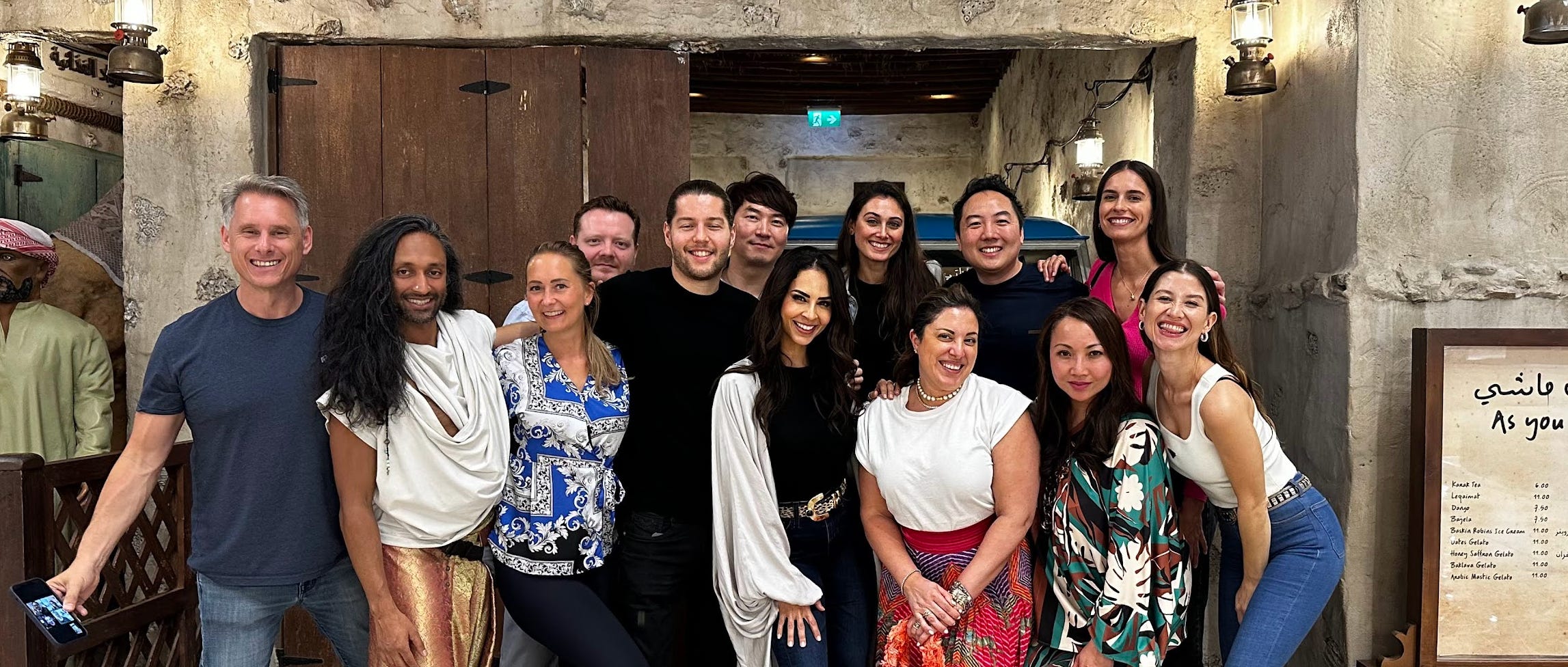
Dubai. The world shows up here. Dubai attracts talent, builders, and individuals who maintain the belief that great things are achievable.
The honest description is that it felt like Los Angeles with a different operating system.
The ambition was overt and unapologetic the way Los Angeles ambition once was. People came to build. The system responded. Capital moved. Decisions got made. There was a clarity of purpose in the business culture I had not felt since the early years in California.
The people were serious, internationally minded, and motivated by making things rather than reacting to things. The conversations felt like those warehouse meetings from 2013, before everything shifted. People leaned forward. Ideas got hot. You left dinners with a list of things to do rather than a catalog of grievances to carry home.
The government functioned as a co-conspirator rather than an obstacle. Big things were not tolerated. They were expected. Infrastructure matched ambition in a way that is genuinely rare.
And yet.
Between May and September, the city emptied. The heat becomes absolute. The people who generate the energy scatter to other cities and other lives. October brings most of them back, but the gap matters more than it sounds. Momentum is not just about having the right people in the right rooms. It is about what happens when those people show up for each other consistently over a long stretch of time. The UAE had the structure. It did not have the continuity.
I found the closest thing. Not the thing itself.
Bali: Paradise Dampens Momentum
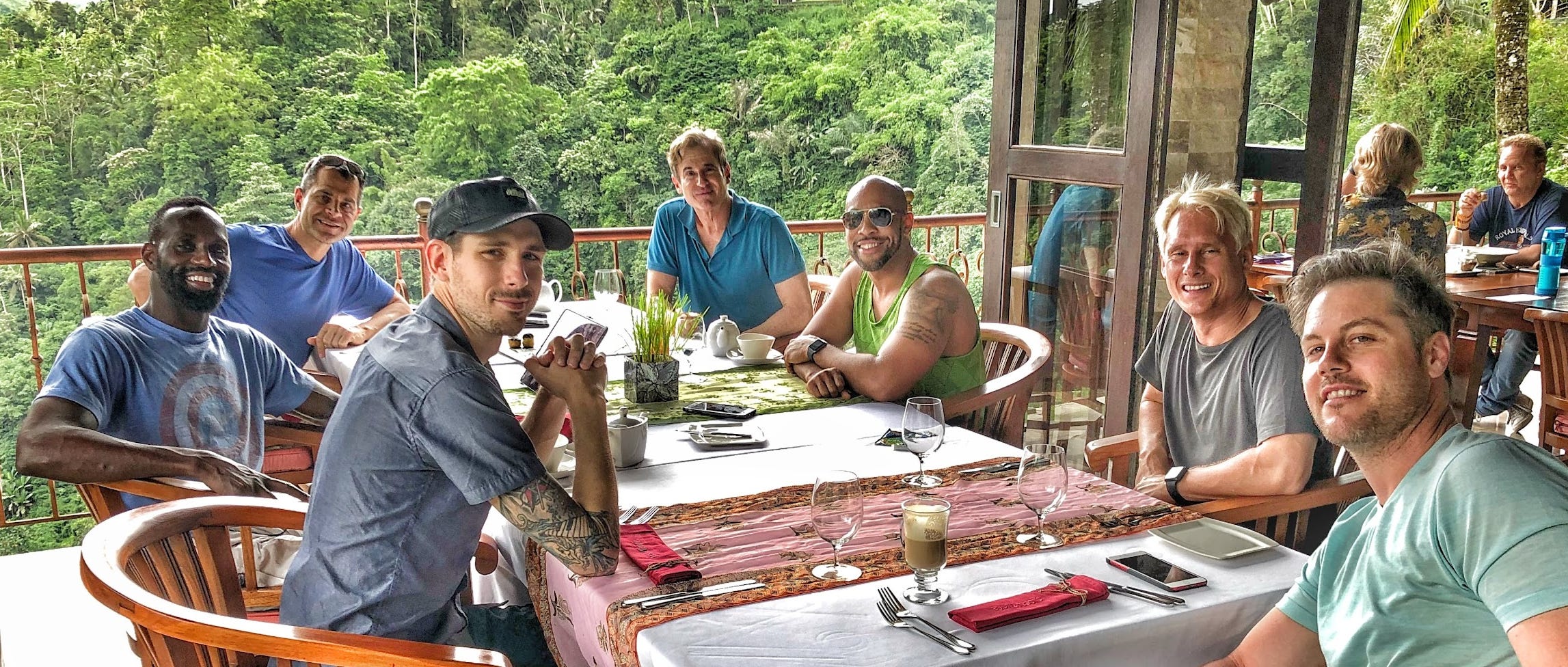
Bali has a gift. It makes brilliant, driven people forget, briefly, that they are brilliant and driven. These gatherings were some of the best conversations I had anywhere.
Bali offers, with real generosity, almost everything people say they want. Community. Health. Beauty. Weather that makes every morning feel like a gift. Food that costs almost nothing and tastes extraordinary.
The people who move there are not wrong. It is genuinely good.
What it showed me was the difference between wanting to live and wanting to build. Those are not the same default settings, and the distinction is not a judgment. Most people, given the choice, would take presence over productivity. Bali selects for people who have made that call. Projects start and dissolve gently, like clouds in the extraordinary sky. The energy is there. The pressure that turns energy into output is not.
Paradise is very good at many things. Sustaining momentum is not among them.
Cambodia: Aspiration Ahead of Its Time

Cambodia does not lack ambition. It lacks infrastructure and opportunity. This partnership with the Cambodian Broadcasting Service is my attempt to help change that.
Cambodia was the most honest place I visited, in a specific sense: it did not pretend to be further along than it was.
The infrastructure lags. The gap between what people want to build and what the environment currently supports is real and visible.
But the drive was present in a way I found unexpectedly moving. The tuk-tuks alone told you something: painted in colors that had no interest in being practical, every one of them its own small declaration. People wanted work. They wanted projects. They wanted the future to arrive faster than history had allowed. You could feel aspiration pressing against limitation, not with frustration but with a patient determination that said: we understand the distance, and we intend to cover it.
I have been to places with better infrastructure and far less of that quality. Give Cambodia twenty years, and it may be something remarkable.
Thailand: Joy as Foundation
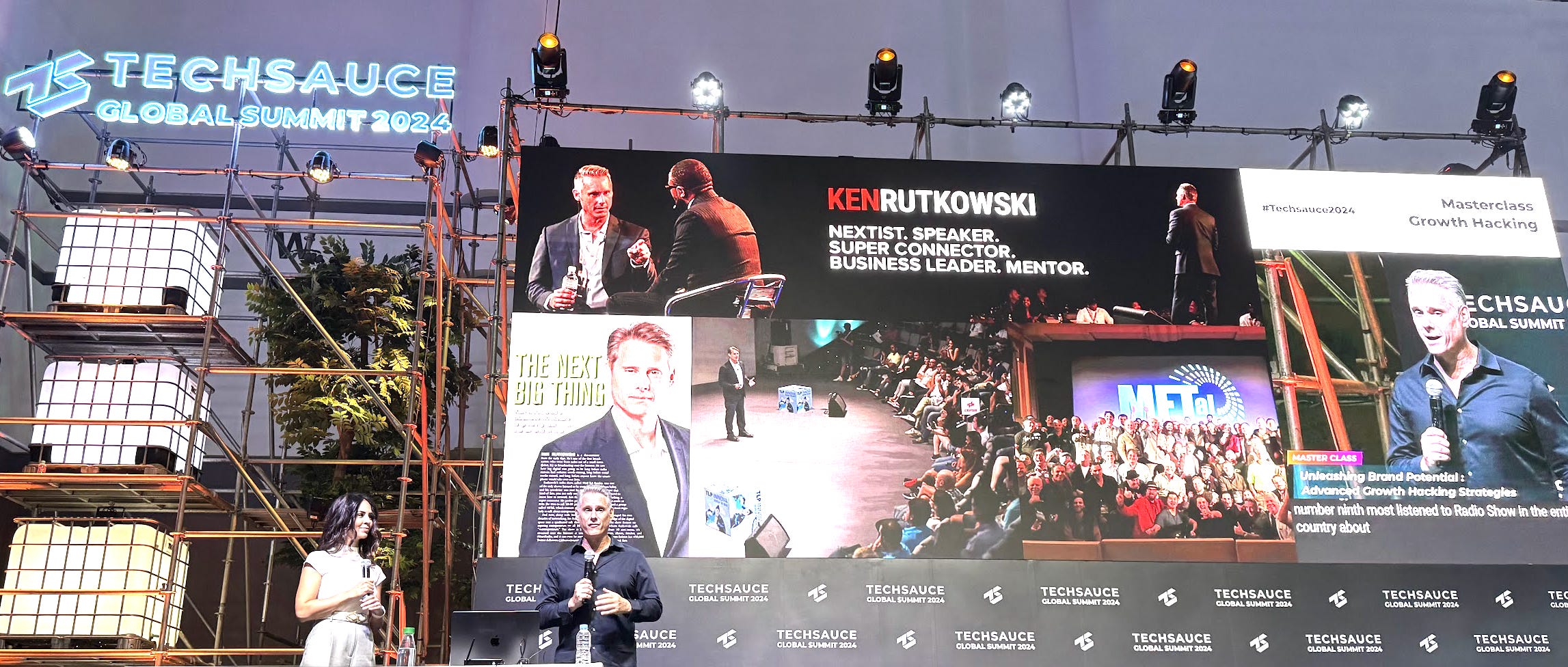
Speaking at Techsauce Global Summit in Bangkok. The entrepreneurial energy here is not subtle. These are people who are hungry to build and learn and are not waiting for anyone's permission.
I live in Bangkok now, and I knew something was different before I had even left the airport.
Nobody was performing. The immigration officer smiled, and I didn’t feel a transaction behind it. The taxi driver asked where I was from and listened to the answer. Small things. But after years of moving through cities where every interaction carried a subtle charge of positioning, where people were always, however slightly, auditioning for something, the absence of that charge was so immediate it felt physical. I noticed it the way you notice when a noise you have been living with finally stops.
One word: Buddhism.
Not as religion only, but as a way of moving through daily life. Work is approached with care but without the anxiety that makes work in other cultures feel like combat. People are present without performing it. Kindness is default rather than strategy. Strangers ask how you are and mean the question. Nobody leads with what you do.
I noticed what this does to the work itself. When you are not burning energy defending your position or signaling the right affiliations, you have more left for the actual problem. When the people around you are not performing competitiveness, collaboration gets easier in ways that are hard to describe but immediate to feel.
Bangkok also has something I did not expect: a serious, functioning business culture that operates largely outside the identity framework that has taken over equivalent communities in the West. People talk about what they are building. The conversation has not been rerouted through the mechanism that turns every professional interaction into an audition for tribal membership.
I love living here. It does not yet feel like home the way Los Angeles did in 2013. But I have started to think home was never exactly what I was looking for.
What I Found Instead
I thought I was looking for a place that had what Los Angeles once had. The energy. The shared forward motion. The rooms where people leaned in.
What I was actually tracking was something more precise. The presence or absence of what I now think of as identity pressure. The degree to which a culture demands that you declare yourself before it lets you in. The degree to which belonging is conditional on tribal alignment rather than on what you are building or thinking or trying to work out.
The places that came closest shared one quality. Low identity pressure. People were not scanning one another for the right signals. Politics existed, as it does everywhere. But it did not colonize personality. You could sit across from someone with sharply different views and spend three hours on ideas without either of you needing to establish coordinates first.
In those rooms, the question was what you were building.
Not who you were against.
That difference is subtle. It is also the whole thing.
Part One was a diagnosis. This has been a search. Part Three will be a threshold. Not a wish list or a polite suggestion. A clear account of what Los Angeles and the United States would need to actually change to get people like me to come back. What the culture needs to rebuild. What are the incentives that need to stop rewarding. And what it would take to replace the question of who you are against with the only question that ever produced anything worth having.
I am still looking for that future.
I have started to believe it exists.
This is Part Two of a three-part series.
Part Three: The threshold. What Los Angeles and America would need to change to earn back the people they lost. And whether they are willing to meet it.
Fantastic article. The language flows, and the content is genuine. More than anything else, this article has the power to influence where I may move.
Wonderful. I reposted on LI and tagged you